
Dealer: N Vul: E/W
NORTH
♠ Q862
♥ 764
♦ 1094
♣ 752
WEST EAST
♠ A ♠ KJ74
♥ KQ10953 ♥ A82
♦ K7 ♦ AQ85
♣ J643 ♣ AK
SOUTH
♠ 10953
♥ J
♦ J632
♣ Q1098
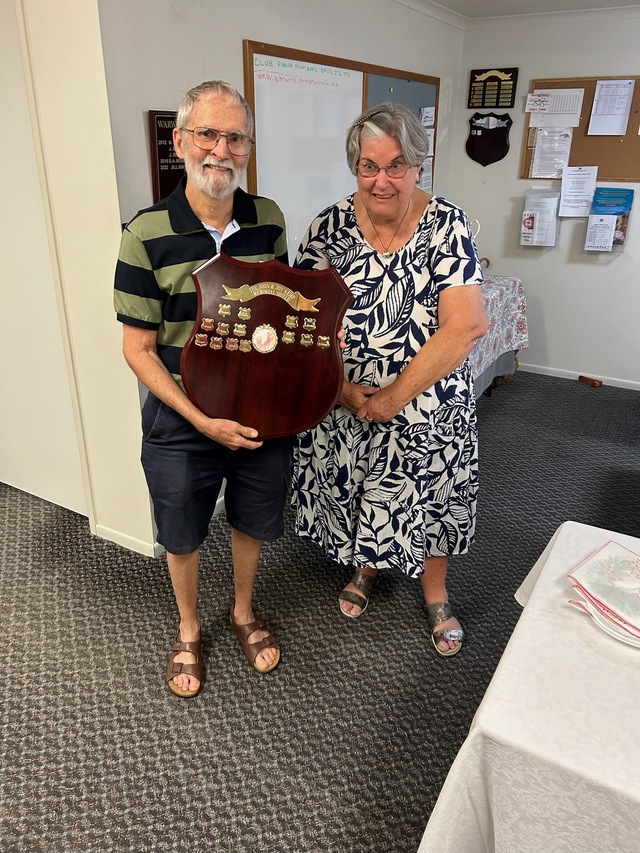
Counting is an essential skill in bridge. Last Monday John Nankervis and Pat Kelly bid the first Grand Slam since August. Their contract of 7NT (vulnerable) earned them the maximum score of 2200. Two other pairs were content to play in 6NT, while the remaining pair subsided in 3NT.
John and Pat succeeded, not because of some wonderful bidding system, but because they counted more carefully than the other pairs. There are various ways to reach 7NT, but the simplest is for East to open the bidding with 2C, showing 19-21 high card points (out of 40) and for West to reply 2D – asking partner for more information. After East replies 2NT, it is up to West to drive the bidding higher and to bid 4C, which asks East to indicate how many Aces East holds. 3NT shows three Aces. 4C from West asks about Kings; 4S shows two Kings. West now knows that East/West hold all the Aces and all the Kings. West’s long heart suit promises six heart tricks. West can now count as probable tricks two spades, six hearts, two diamonds and two clubs – twelve in all. East has 18 high card points in Kings and Aces, so there is room for a Queen to make the thirteenth trick. The lead is immaterial; that diamond Queen is the thirteenth trick. The only worry for declarer is the possibility that on a bad day North might hold four hearts, including the Jack. This was a good day. The bridge notes will return in early January.
Results, Monday, 15/12/25 (4-table Howell): J. Nankervis P. Kelly (72,0) 1; N. Collins M. Simpson (66.7) 2; T. Hinde L. Don (59.9) 3; C. Duggan N. McGinness (51.2) 4. Friday, 19/12/25 (5-table Mitchell): N/S N. Collins M. Simpson (62.5) 1; N. Bonnell J. Rose (62.1) 2. E/W J. Nankervis N. McGinness (62.1) 1; J. Loy S. Head (55.4) 2.