
Dealer: W Vul: Nil
NORTH
♠ 74
♥ Q75
♦ QJ1082
♣ 543
WEST EAST
♠ KQ8 ♠ 105
♥ AKJ4 ♥ 986
♦ 76 ♦ AK9543
♣ AKQ6 ♣ 97
SOUTH
♠ AJ8632
♥ 1032
♦ —
♣ J1082
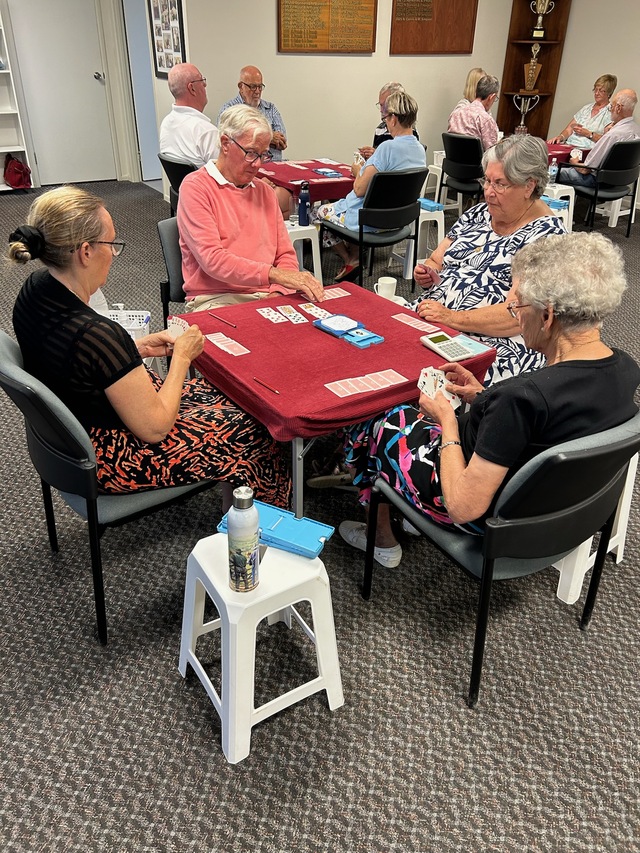
Beware of novice players. Old hands don’t like playing against them because novices do things that more seasoned players would never think of attempting. The following example has come into our possession. On the featured board it was South’s turn to open the bidding. An old hand may have bid 2S, showing a weak hand and six spades. Instead, South bid 1S, apparently showing an average hand and possibly only five spades. West could no longer use a common artificial bid to show a very strong hand, so West doubled 1S. North, with an even weaker hand, bid 2D. West could now no longer consider no trumps unless East had diamond stoppers. East doubled the diamond bid, hoping that West would pass. At that level the bid was normally a request for partner to bid partner’s best suit, so West bid 2H and the bidding proceeded to 4H.
North led the two of diamonds (Old hands would have chosen the Queen) to East’s King, on which South played a small spade. West now presumed that North held a two-suited hand of hearts and diamonds and that South had no red cards. Safe in the knowledge that South was void in trumps, declarer called for the Ace of diamonds. South now produced the three of hearts, which South had thought was a harmless discard. A veil is best placed over the rest of the play, but declarer, thoroughly confused, misplayed trumps and finished with nine tricks instead of ten for a bottom score. At other tables where North/South followed normal protocols, East/West had an uneventful path to ten tricks in either no trumps or hearts.
Results, Monday, 12/01/26 (3 & 1/2-table Howell): J. Loy L. Don (71.9) 1; J. Nankervis P. Kelly (62.5) 2; P. Campbell T. Hinde (52.1) 3. Friday, 16/01/26 (4-table Mitchell): N/S N. Bonnell T. Hinde (68.2) 1; P. Kelly D. Moran (44.3) 2. E/W W.Milne J. Sipple (58.3) 1; G. Schmidt I. House (53.6) 2.